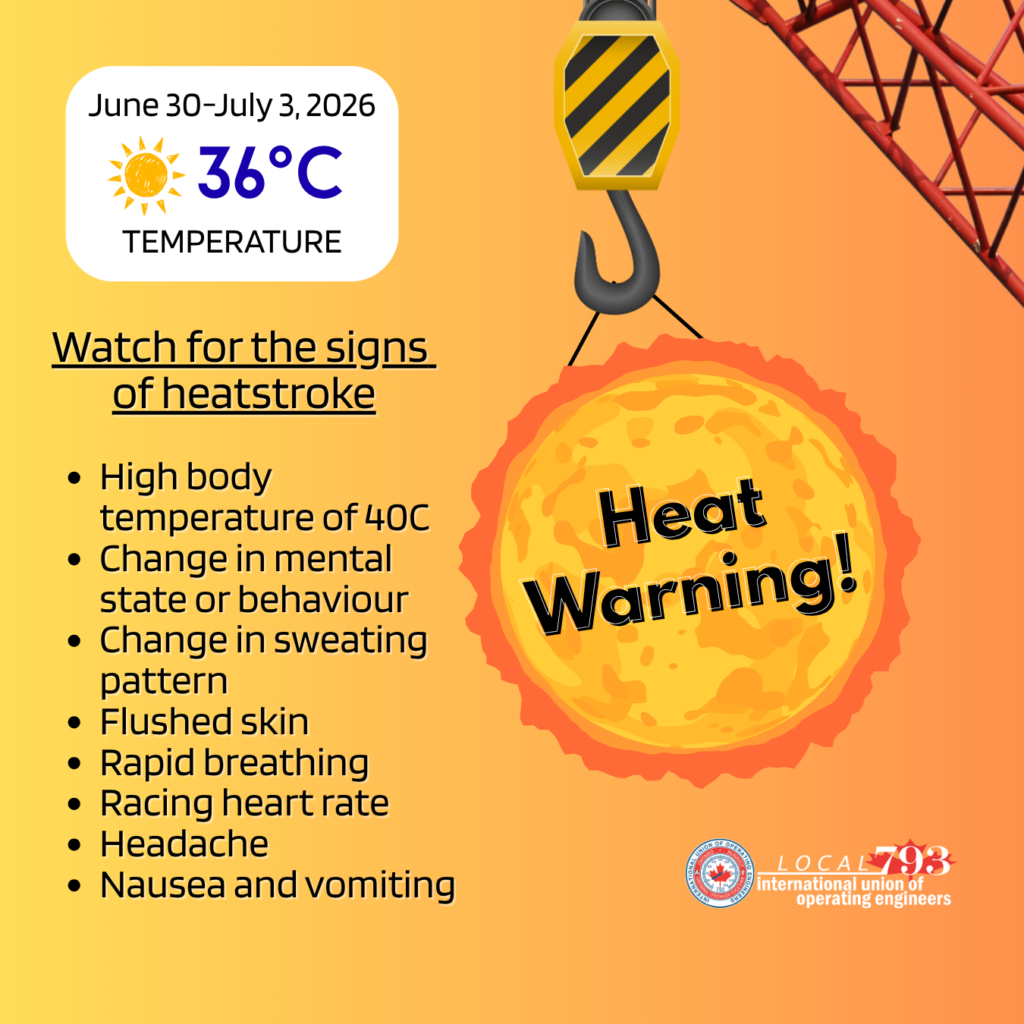
Orange and yellow-level heat warnings have been issued by Environment Canada for much of Ontario, with temperatures expected to hit 36C during a prolonged event beginning today, June 30, and lasting until at least Friday, July 3.
Local 793 members should be on the lookout for signs of heat-related illnesses during this period of especially hot and humid weather.
For an interactive map showing the areas affected, visit the Environment Canada website here.
The Canadian Centre for Occupational Health and Safety warns that heat-related illnesses can strike with little warning and can cause myriad problems from rashes and cramps to exhaustion and full-blown heat stroke. Symptoms of heat stress can include sunburn, fainting, heavy sweating, headaches and dizzy spells.
It’s important, then, for OEs to prepare ahead of time, recognize symptoms of heat stress and know how to treat it when problems arise.
Heat stress occurs when the body can no longer maintain its normal temperature. The body’s internal thermostat maintains a constant inner temperature by pumping more blood to the skin and by increasing sweat production. But in very hot environments the body temperature can rise, resulting in heat stress. When the body can no longer cope, several illnesses can occur, including:
- Heat Rash: This is characterized by tiny red spots on the skin that can cause a prickling sensation. It’s a result of inflammation when the ducts of sweat glands become plugged.
- Heat Cramps: These are sharp pains in the muscles caused by an imbalance resulting from failure to replace salt lost with sweat.
- Heat Exhaustion: This is caused by loss of body water and salt through excessive sweating. Symptoms include weakness, dizziness, visual disturbances, intense thirst, headaches, vomiting, muscle cramps and diarrhea.
- Heat Stroke: This condition requires immediate medical attention and is characterized by an elevated body temperature. Signs of heat stroke include dry, hot skin, a high body temperature and complete or partial loss of consciousness.
Prolonged exposure to heat can cause other problems such as sleep disturbances and susceptibility to minor injuries and sicknesses.
The Ontario Ministry of Labour recommends that workers in a hot environment should try to drink a cup of water every 20 minutes and that workers also:
- avoid working in direct sunlight
- reduce the pace of work
- take breaks in a cool or shaded area
- schedule heavy work for cooler periods
- wear light-coloured clothing
- reduce the physical demands of work
Employers have a duty under clause 25(2)(h) of the Occupational Health and Safety Act to take every precaution reasonable in the circumstances for the protection of a worker. This includes developing policies and procedures to protect workers in environments that are hot because of hot processes and/or weather.
Any Local 793 members with concerns about employers not taking appropriate steps to help workers avoid heat stroke and exhaustion should contact their business representative immediately or Local 793 Director of Health and Safety Brian Alexander at 905-469-9299, ext. 2206. You can find the contact details for your business rep by visiting Local 793’s website here.
Click here for more information about heat exhaustion and heat stroke from the Infrastructure Health and Safety Association.
Click here for more information on managing heat stress at work from the Ontario government.